History
Issue 105
For this issue we have a few interesting items starting with one on Thames Transit.
Thames Transit –
the early years
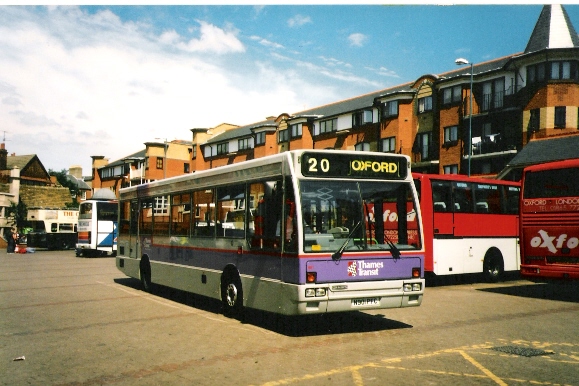
I have attached a series of Thames Transit pictures from various years and
ownership of the Company. It was 30 years ago this year since the
Company was established in Oxford by Harry Blundred and co. and 20 years
since the sale of the operation to Stagecoach.
Although 'starting from scratch' in Oxford in 1987 TT quickly built up a
network of city cervices and the infamous Oxford Tube service to London.
Based on Harry Blundred's high frequency minibus theory the routes were also
'hail & ride' so attractive for marketing 'door to door service. At
this time one was able to drive the minibuses on a car licence so
recruitment was easier and quicker. The South Midland operations which
were at one time part of COMS were acquired in 1988 giving a substantial
rural network to tie in with that of the city. A mix of more
traditional and conventional ex NBC vehicles were acquired but in a
relatively short space of time these were replaced with minibuses. The
Bicester routes were operated with larger vehicles (Plaxton Derwent bodied
Leyland Tigers) and open topped elderly vehicles were used during summer
seasons on the Blenheim Palace service.
By the mid 1990s the Dennis Dart (most with dual door configuration) was the
popular replacement for TT to the early Ford Transit minibuses. These
featured individual route branding. Harry Blundred's theory was
passengers would remember a route name more than a route number. It
also gave a good local feel to the services. A handful of unbranded
float vehicles were available also.
In a surprise move being as the Company had just had very public oriented
10th year celebrations in 1997, the whole of the Transit Group was sold to
Stagecoach. The 'stripes' appeared soon afterwards and new vehicle
deliveries were to Stagecoach Group standard. This included the
introduction of double deckers to city routes. The photos I have
included cover a range of vehicle types, city and Tube operations and
different eras.
TT1 - One of a trio of Plaxton Verde bodied Dennis Lance vehicles used on
out of city routes, mainly the Woodstock corridor. This one is 901.
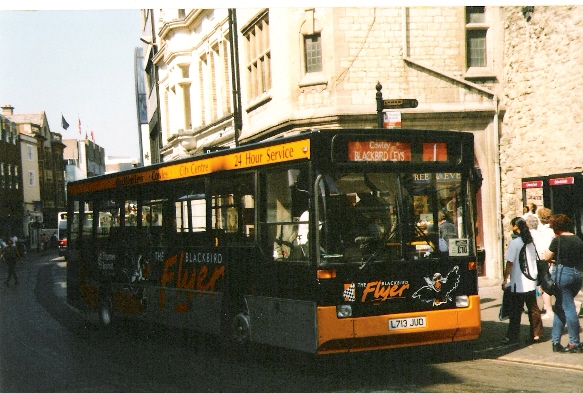
TT2 - L713 JUD is in the second Blackbird Flyer livery introduced
shortly before Stagecoach took over. This was a member of the original
Plaxton Pointer bodied Dennis Dart batch from 1993. OBC introduced
dual doored Darts in 1994 but with Marshall bodywork. Seen at Carfax about
to head to Blackbird Leys, this was the original route introduced by TT in
1987.
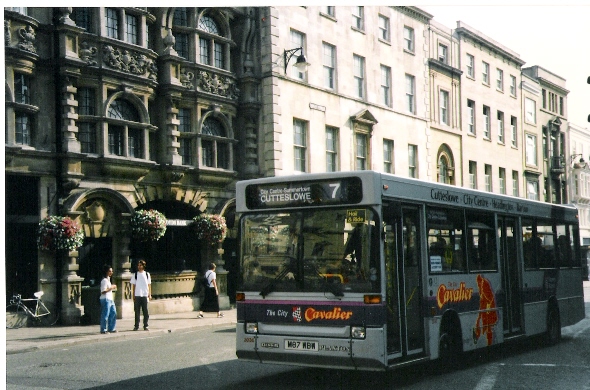
TT3 - M87 WBW is branded for the 'City Cavalier' (Cutteslowe to Barton)
Others were similarly branded but with the legend 'Kidlington Cavalier' for
the Kidlington part of the route. I believe on of this batch is now in
preservation.
TT4 - M95 WBW is loading at St. Giles on the 'City Circle' routes.
These made their way out to John Radcliffe Hospital and back, 10 clockwise
10A anti-clockwise. The branding was Carousel, ironically it wasn't
too long after this photo was taken in 1997 that the name would be used on
another local start up operation in High Wycombe!
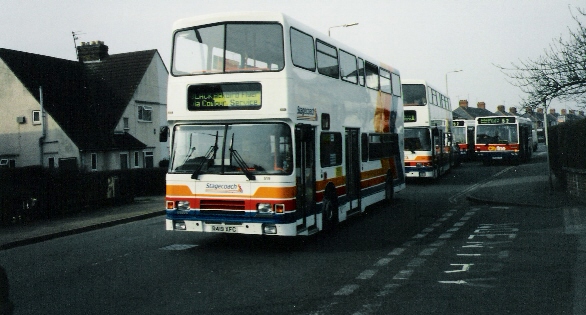
SOX1 - Double deckers out in force on the Cowley Road! Outside the old COMS depot two of their Volvo B10Bs are in hot pursuit! Stagecoach were specifying double door low height Alexander RL bodied Volvo Olympians at this time also to the London operations. The Oxford batch would be converted to single door for onward use within the group in later years.
SOX2 - The old and new order in 1997 at Carfax. Stagecoach stripes heading to Abingdon whilst a former 'Cavalier' now unbranded operates the Blackbird Leys route.
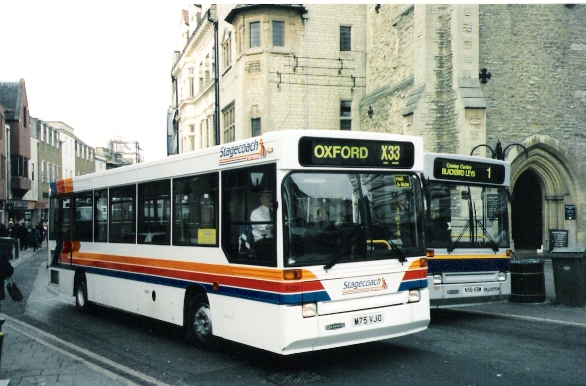
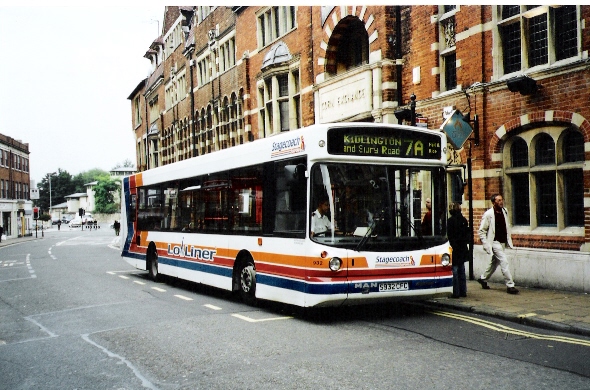
SOX9 & SOX3 - Stagecoach Oxford were the first operator of low floor vehicles in the City. These were of 'standard' Alexander ALX200 Dart SLF combination and carried the 'Lo-Liner' branding in use at the time. The term 'Lo-Liner' was used in a number of locations by passengers and staff alike to describe generically the types of vehicles in use at the time. MAN were in favour with Stagecoach then and the S-registered batch worked in Oxford for many years, with route branding and colouring for the major city services. This one (932) at George Street was heading for Kidlington and was an unbranded 'float' vehicle.
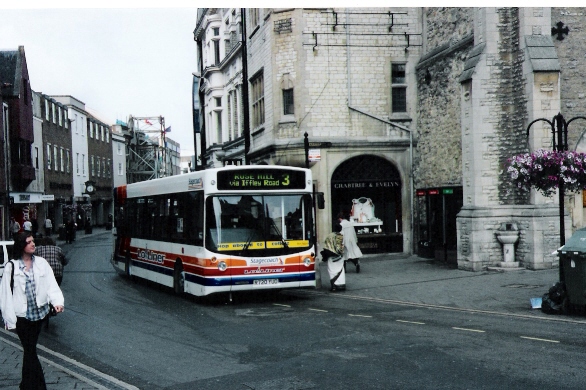
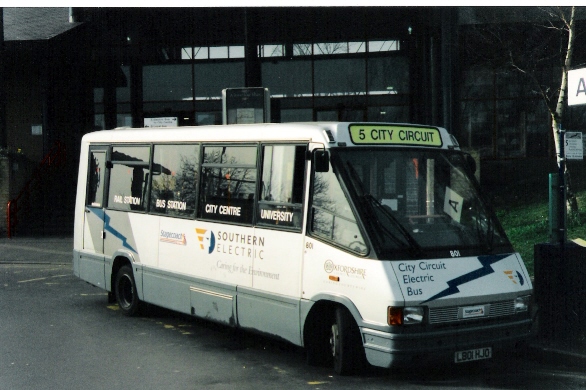
SOX4 - Stagecoach Oxford ran the 4 battery powered Optare Metroriders on what was route 5 the 'City Circuit' OBC had this for the majority of its operation and each vehicle was 'charged up' by a plug in unit at the railway station.
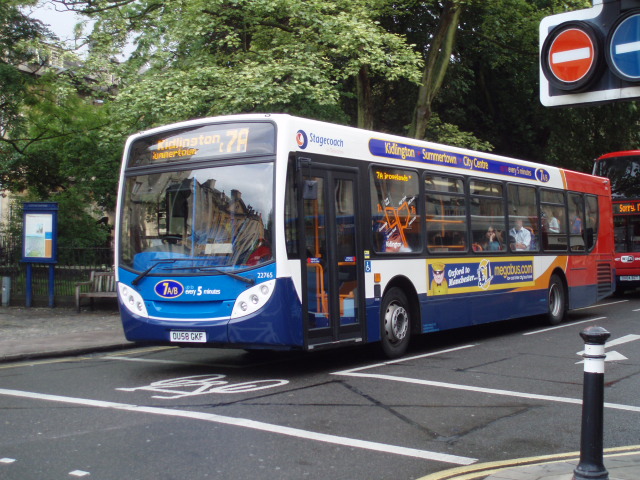
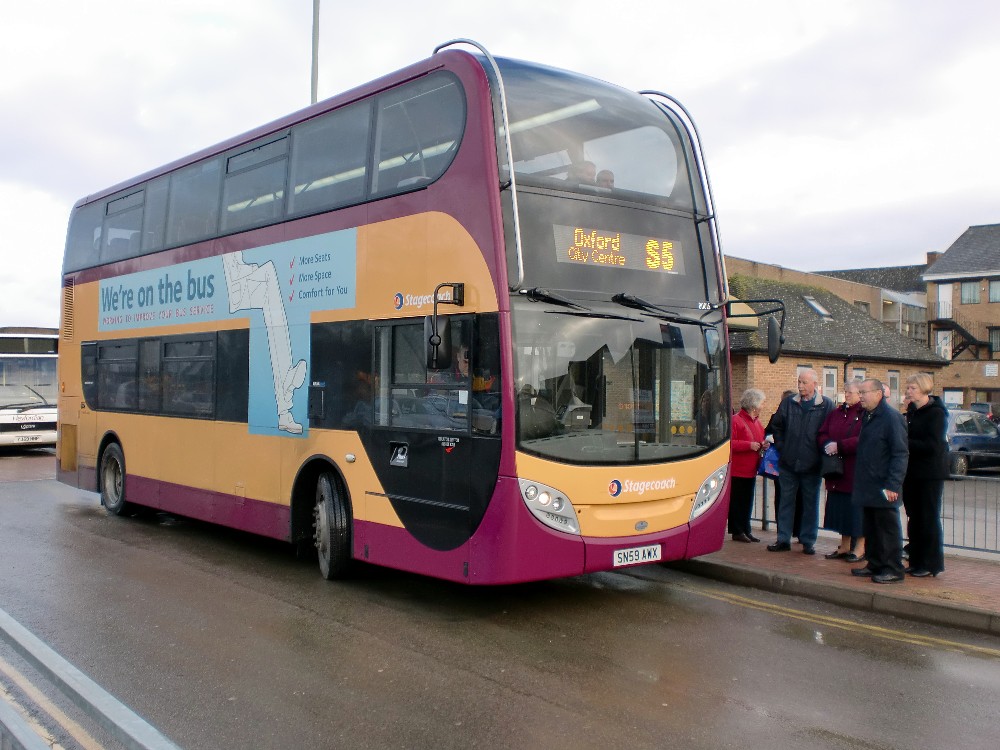
SOX5/6 - This a more recent standard for Stagecoach. MAN still in use but on the new Enviro body heading for Kidlington. The Scania chassis was not common in the Group until a trial batch inn 2008 arrived at Oxford. Stagecoach must have liked what was on offer as they are still receiving this combination today! This is the old layout at Bicester Bus Station, and vehicles on offer today are 'Gold' standard. The 'X5' coach about to overtake is of the old order too and since then new 2 axle and now 3 axle Volvos are in use on the service. Bringing much needed comfort and style lacking when this photo was taken.
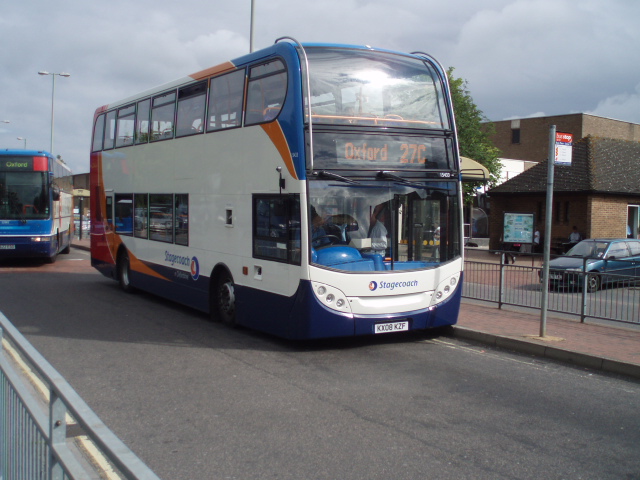
SOX 7 - Alexander demonstrator in use with Stagecoach Oxford again at the
old Bicester Bus Station. This smart vehicle was also used by OBC I
believe.
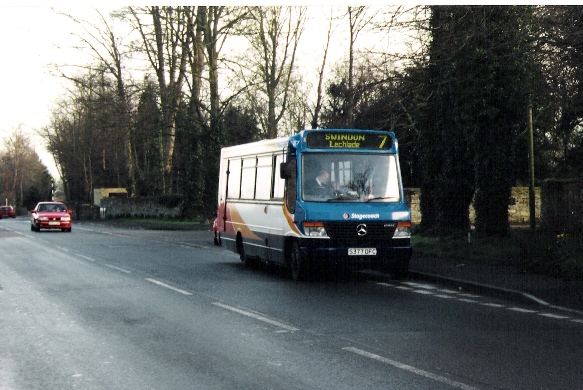
SOX 8 - New minibus era for Oxford! Older Alexander AM types were also used at this time but the ALX100 bodied Varios were a smart batch used by Oxford. Here 377 is pausing at Lechlade on Sunday route 7 to Swindon. I believe this batch saw further service in Kent.
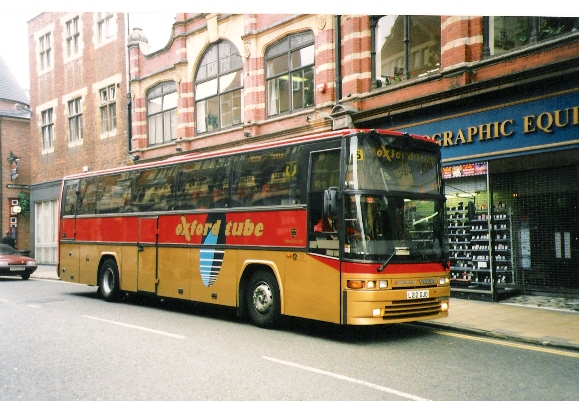
TUBE 1 - Tube selection! An excellent book documenting the history of this service is available written by well known author Malcolm Crowe! Here are a selection of vehicles which were used on the service over the years. This Jonckheere Deauville batch always looked very smart. Here coach 5 (L212 GJO) waits at George Street for space to become available at Gloucester Green. As with TT the fleet numbers bore no resemblance to registration numbers. The gold paint was for the 10th anniversary celebrations of the route. This coach went on for further service with well respected local operator Motts Travel. I had this image put on a t-shirt by Snappy Snaps at the time! The boy gricer!
TUBE 2 - First round of complete Oxford Tube fleet replacement came in 1999 with the MAN/Jonckheere Mistrals. This livery was s nice take on the Stagecoach stripes of the time. Here a trio are seen at the London end of the route.
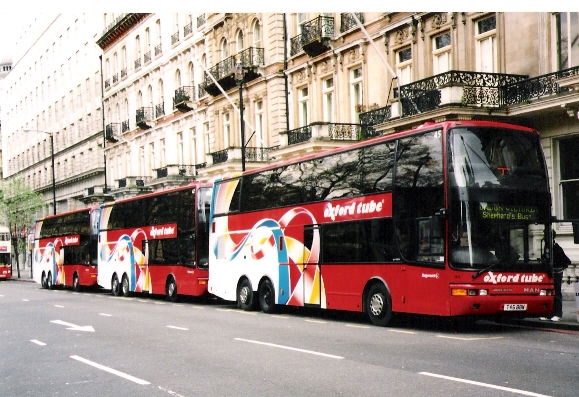
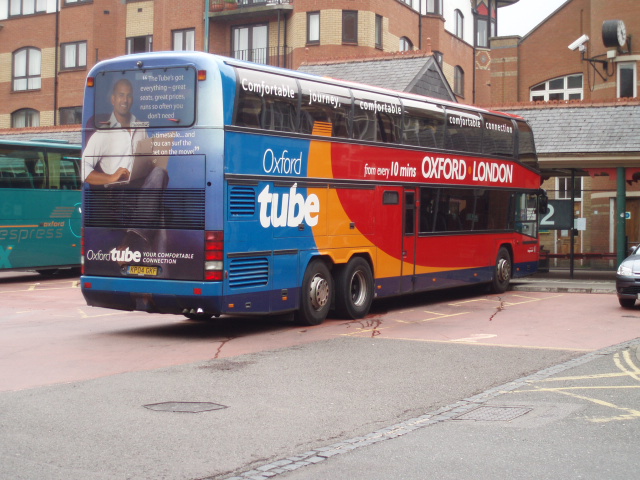
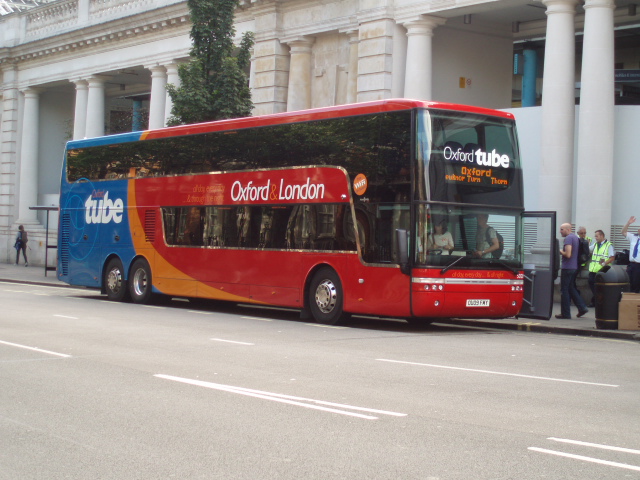
TUBE 3 & TUBE 4 - The following two generations! 2004 saw the Neoplan batch take over. This type was common with Stagecoach from an early time, being used on the Scotland to London services when Stagecoach of Perth would have got the response "who?" Megabus operations also received this type of vehicle at this time too. In 2009 the Van Hool is in fashion, and remains so but in a latter replacement batch.
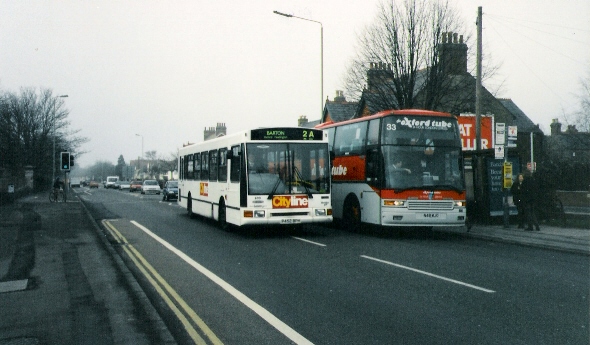
TUBE 5 - Looking a little tired as many of the single deck Tubes did in the end, 33 loads at Headington while demo Dennis Lance P452 BPH) passes heading for Barton. The bus was in use by OBC but has also been with TT.
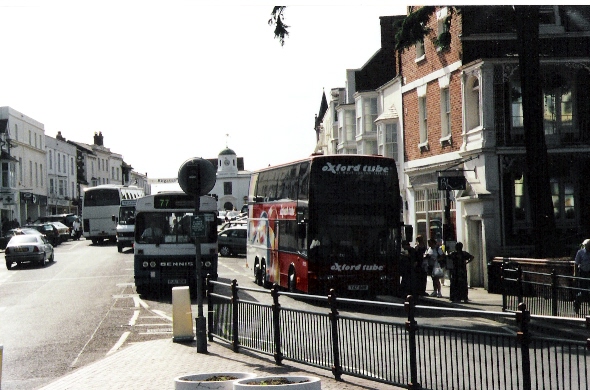
TUBE 6 - Tube 47 has a day out in Stratford on Avon operating the X50
service, summer 2000.
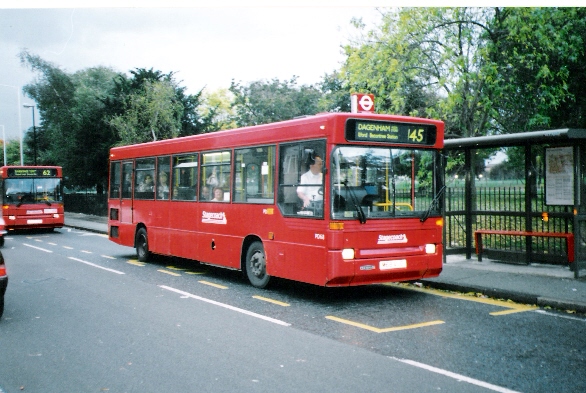
Ex TT1 - Fleet transfers occurred within Stagecoach from early on. The dual door batch which originated with TT passed to East London who exchanged a single door batch to Oxford. Seen at Gale Street, Dagenham two ex Oxford Darts work routes 45 and 62. Their livery was uninspiring but complied whole heartedly with the London buses must be red rule which was being applied. Following pressure from campaigners in London who were seeing all sorts of different coloured buses appearing in central London!
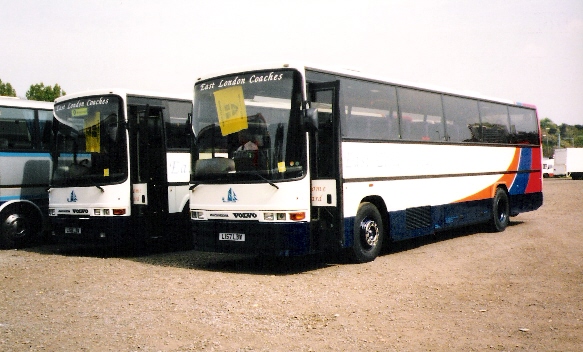
Ex TT2 - Seen at Twickenham at a Northampton Saints vs London Irish rugby match in 2002 this pair were once part of the Tube fleet. Now part of East London's private hire fleet this body style is very smart, the livery could have done with a little something else!

FANFARES AND FORDS
Another small selection, comprising former Southdown Leyland Tiger Cubs with
Weymann 'Fanfare' coachwork and a trio of Fords covering both bus and coach
use. Thanks to Matt Cooper for the additional detail on previous views,
always appreciated.
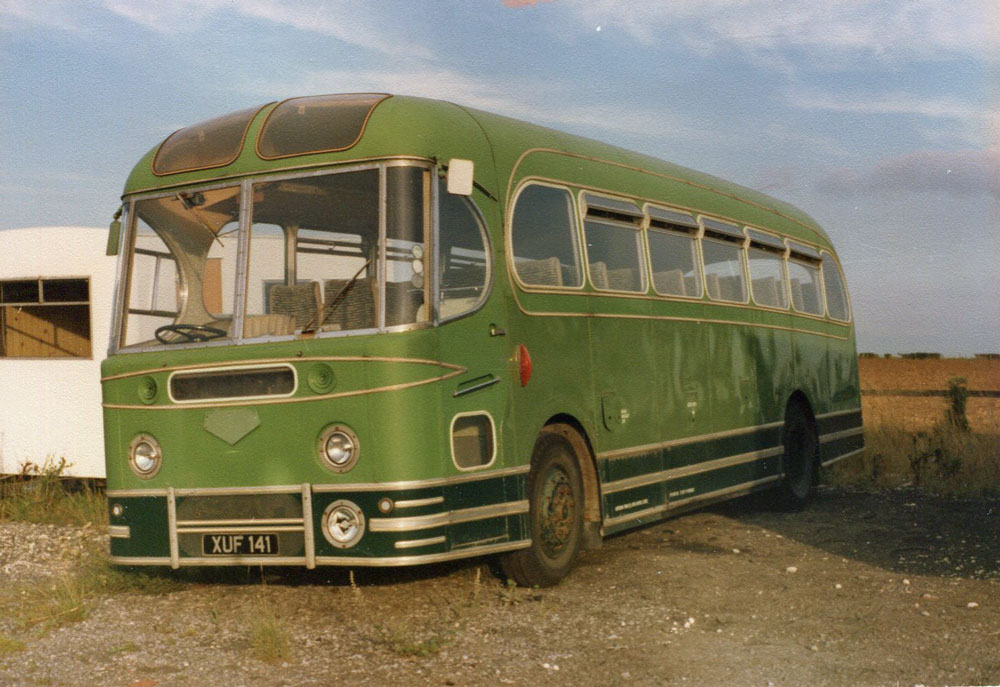
XUF 141 -
The first of the former Southdown examples, XUF 141 was Southdown's 1141, a
PSUC1/2 new in 1960 and registered for that summer season and used on the
Southdown company's Beacon Tours programme. Sold in 1973 to Heyfordian via
the dealer Frank Cowley and still in use when this August 1980 view was
taken at Soulden, notably still in Southdown green. The Fanfare was
introduced by Weymann, better known for bus bodies, in the mid-1950's and
achieved modest success, mainly with B.E.T. fleets. XUF 141 has fortunately
survived into preservation, see photo below.
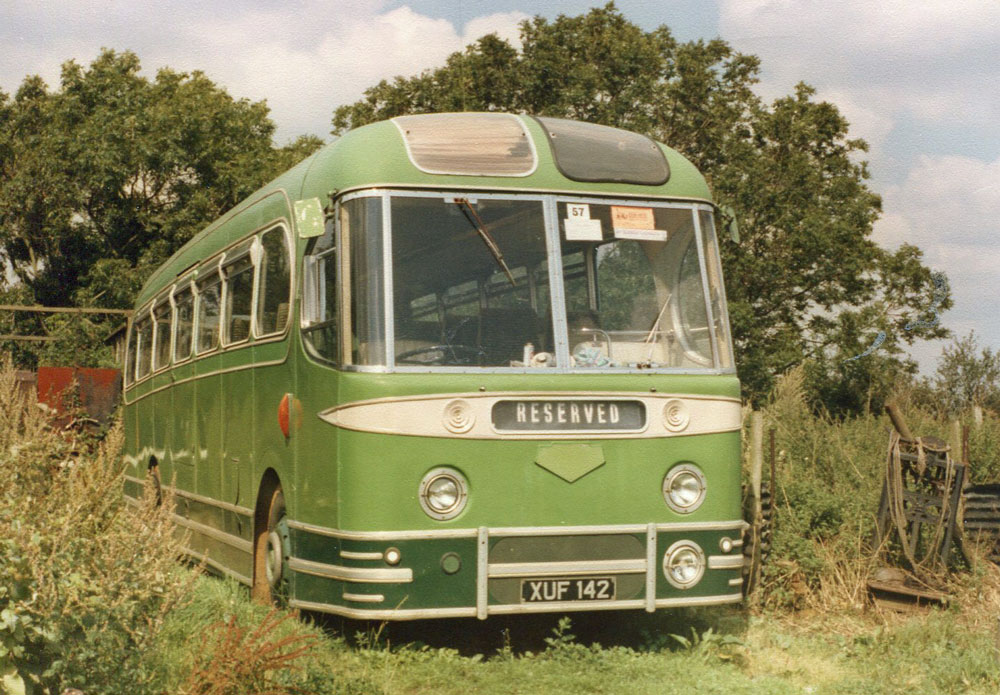
XUF 142 -
Also still in Southdown green, XUF 142 (Southdown 1142) has a history very
similar to 1142, also passing to Heyfordian in 1973. However this example
was sold in 1979 and seen here in the care of Cherwell Transport, despite
evidence of rally appearances in the nearside front screen this coach was
scrapped in 1983. Another August 1980 view, at I believe Wiggington Heath,
near Banbury.
XUF 144 -
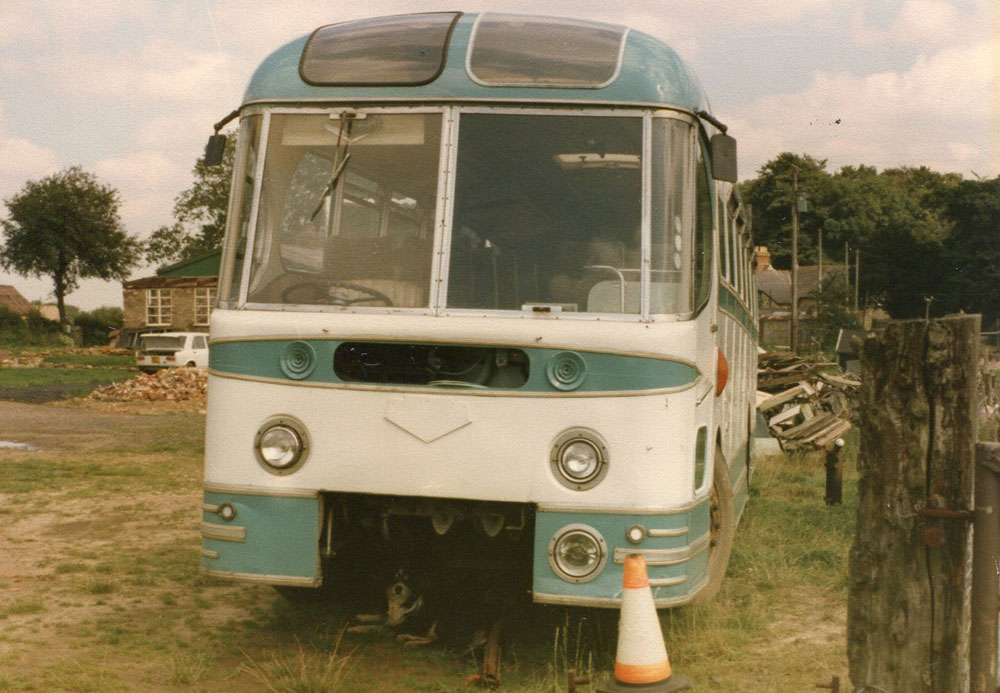
Looking rather down at heal and in the colours of Rainbow of Westbury
(Bucks), XUF 144 (Southdown 1144) was again new in 1960, again with
Heyfordian (1973 to 1979) before Rainbow (1979-1980) and here just acquired
by Heritage of Banbury for preservation. Unfortunately another loss as this
coach was believed scrapped in the mid-1990's. The location is again
Wiggington Heath in August 1980.
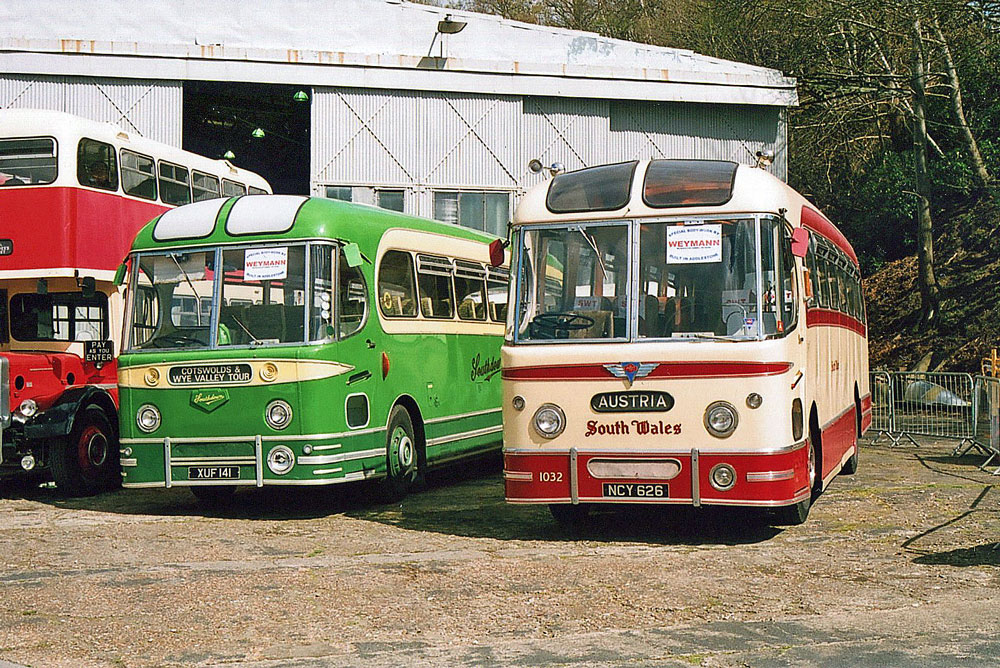
XUF141 and NCY 626 -
Here is XUF 141 in all its restored glory at the 2016 Brooklands Rally.
Seen alongside the only other surviving Fanfare, former South Wales AEC
Reliance NCY 626 which shows a slightly more ambitious tour destination than
that offered by XUF 141 alongside!
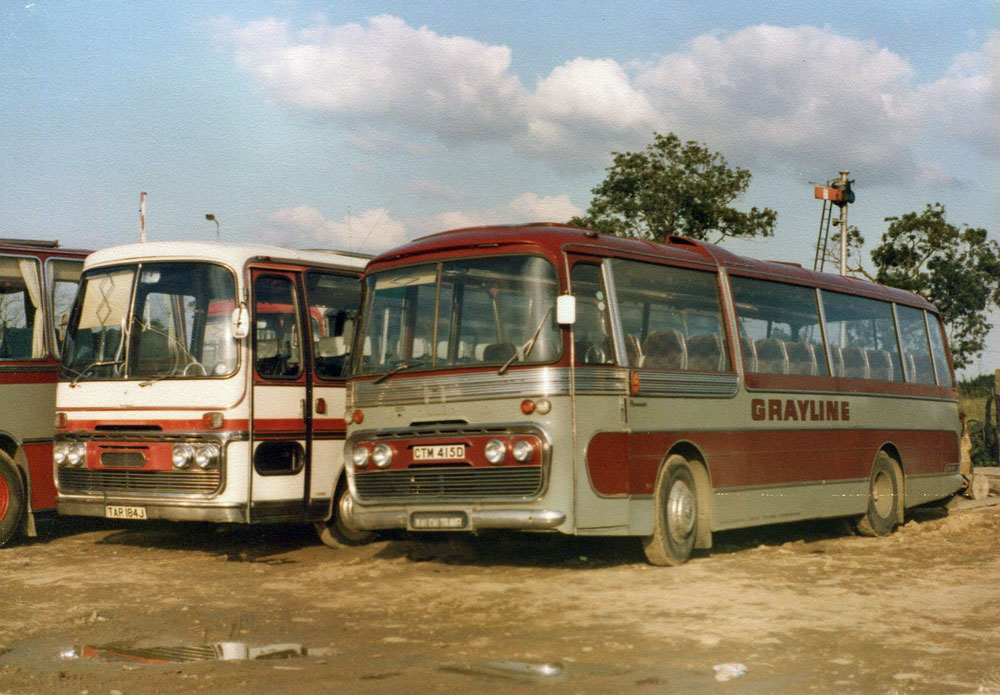
TAP 184J and CTM 415D -
Turning to Fords, these two are in the yard of Grayline of Bicester, again
in August 1980. Not sure on the chassis designation of these two I'm
afraid.
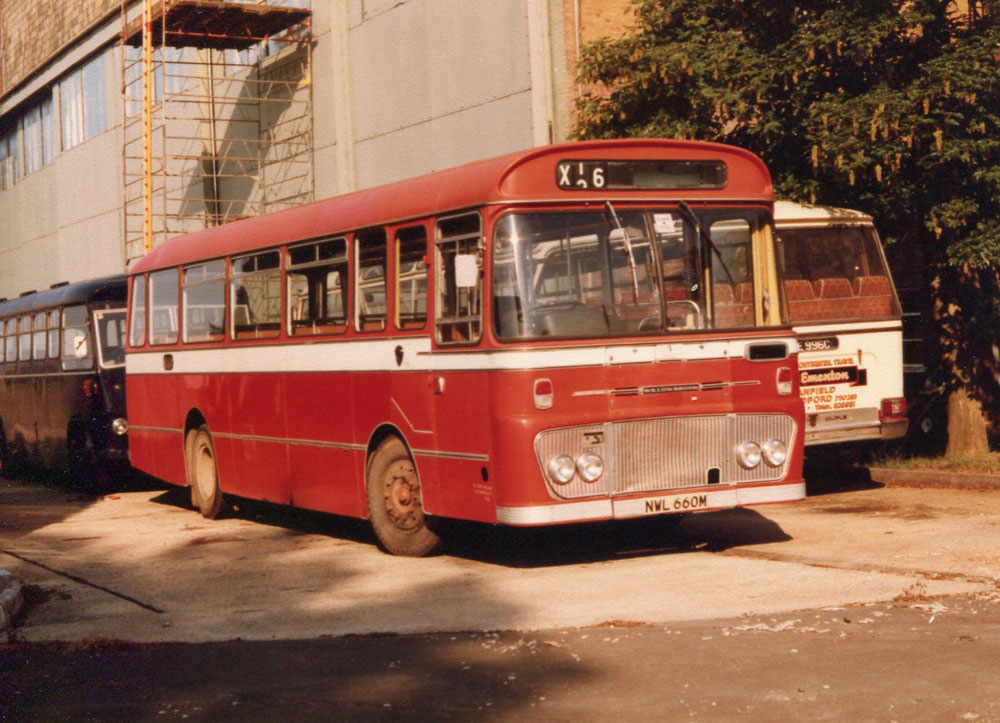
NWL 660M -
Oxford/South Midland was one of a number of NBC to operate light-weight Ford
buses. This one was Oxford's 660 and with Willowbrook bodywork but by the
time of this May 1982 view sold and being used as a school bus at RAF
Bicester.
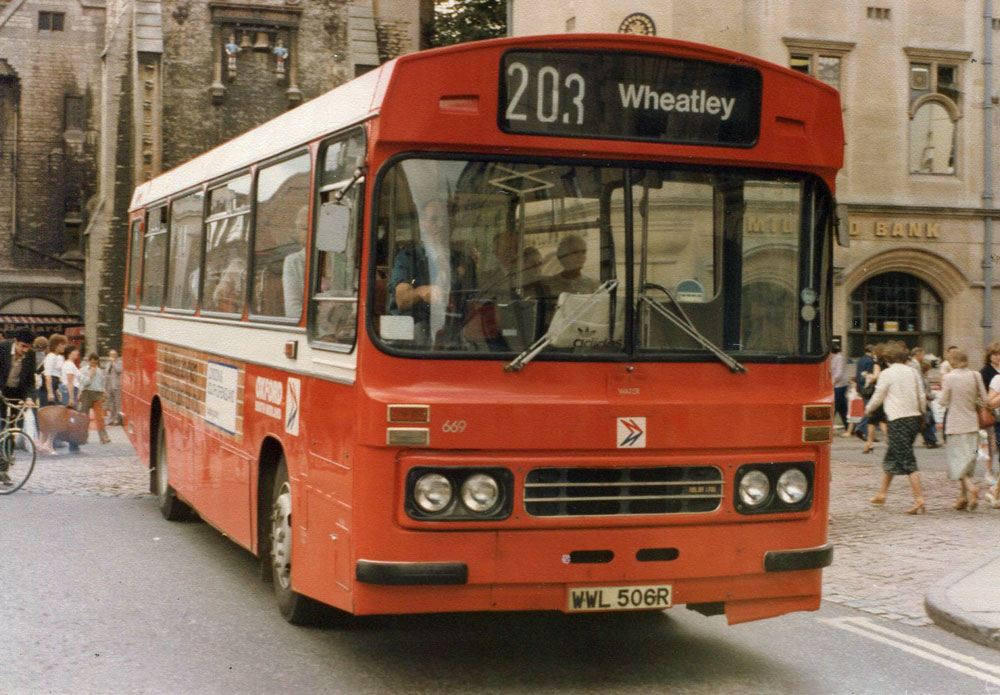
WWL 506R
Slightly newer and still in Oxford/South Midland service is fleet number
669, seen on service 203 by the Carfax Tower in August 1980. 669 has Duple
Dominant bus body, a design I always found quite attractive.
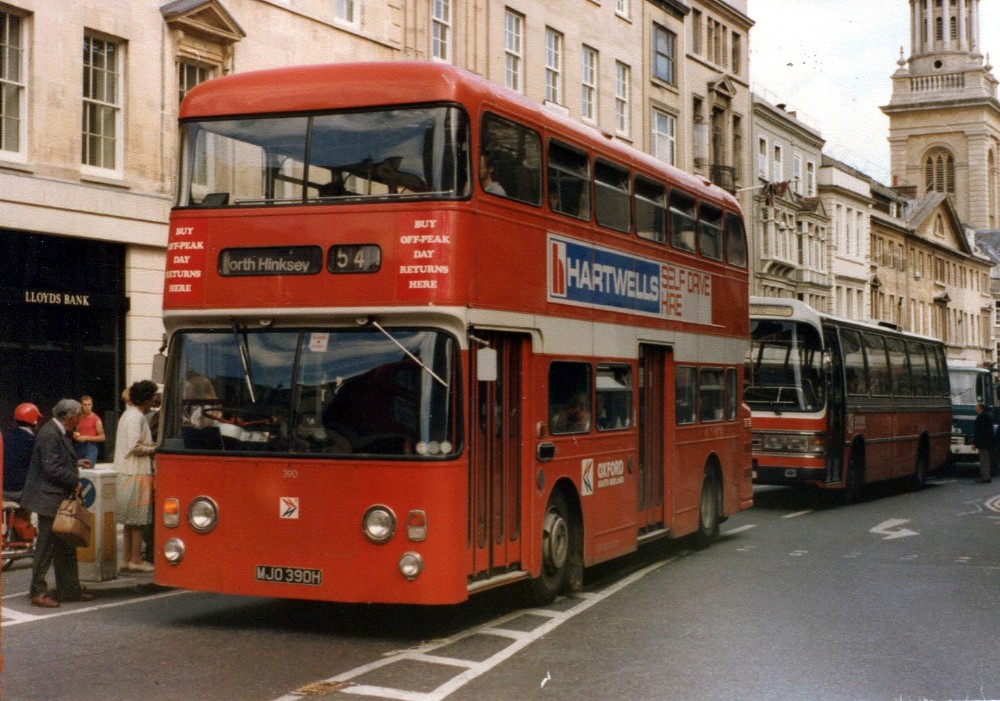
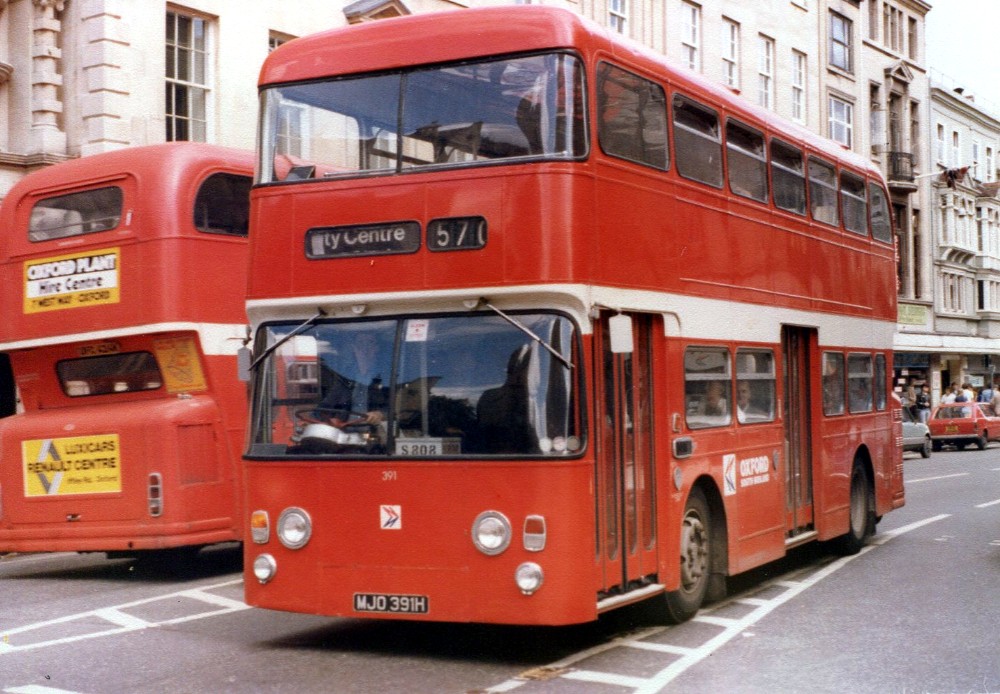
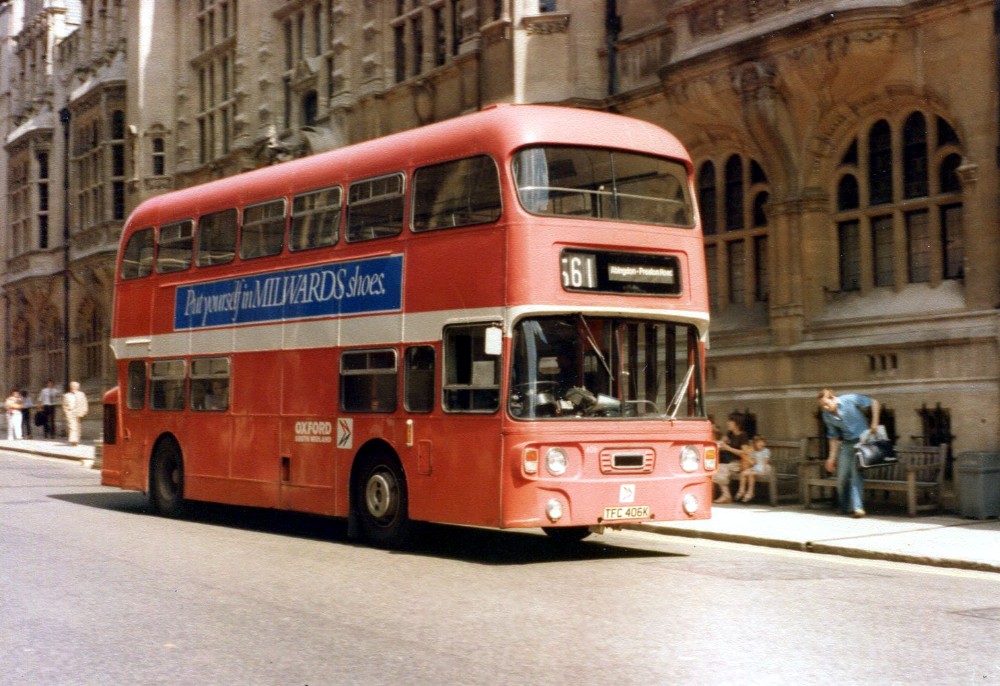
MJO 390H and MJO 391H are of course two examples of the Northern Counties
bodied Daimler Fleetlines that Oxford turned to after the end of double deck
production by AEC. These H-reg examples were in fact from the second batch
of 1979/80 and are seen at the end of the A420 High Street.
What number was the service Chiltern Queens used to
run which served Herschell Crescent?
Alexander R. P. Edwards
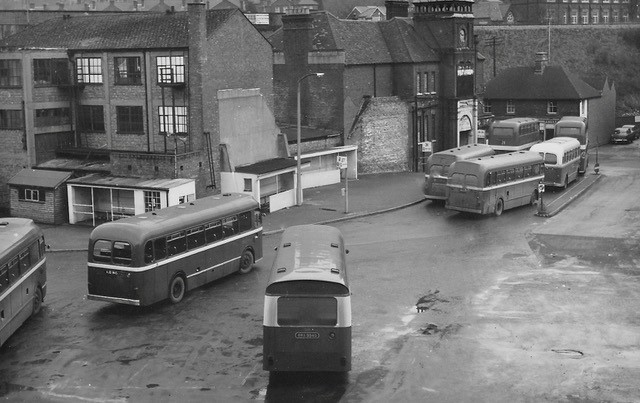
Frogmoor Terminus, High Wycombe in January 1970 by John Bristow.
Intake of breath from all Bristol lovers!!
... and
the attached shot of interest. It shows a line up of independent stage
vehicles in Banbury on an August Saturday in 1970. I wonder how many of
these companies are still running stage services!
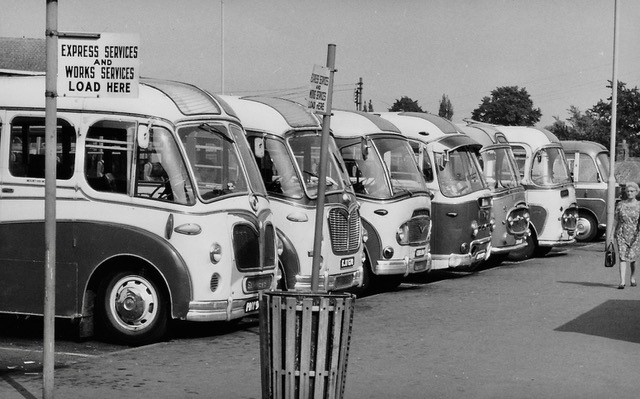
Banbury line up of private operator's coaches in
August 1970 by John Bristow.